Last Updated on September 24, 2026 by Dave Schoenbeck
Introduction: Why The 12 Week Year Book Still Matters
In 2013, Brian P. Moran and Michael Lennington wrote a book that has since helped countless leaders skyrocket to success: The 12 Week Year. Although the business landscape has evolved since the book’s publication, its advice remains timeless. The message is simple: breaking the year into 12-week chunks can help you accomplish more than most people manage in 12 months.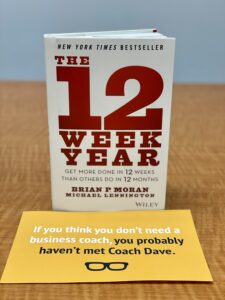
12 Week Year Book Summary: Core Ideas at a Glance
Benefits
The idea behind The 12 Week Year is that by breaking down the year into quarters, you can concentrate your effort, create a better sense of urgency, and sustain your focus. The shorter timeframe helps you beat procrastination by reducing the time you need to stay productive to accomplish a goal.
Another benefit is that breaking larger goals into smaller, more actionable steps makes them easier to achieve. The shortened timeline provides accountability and requires you to be explicit in your goal-setting.
There’s also a mental reward that comes with accomplishing goals quickly. You will feel the forward momentum as you approach the end of each quarter.
Ultimately, you’ll find you’ve more flexibility to adjust your plan based on the progress you’ve made. If you’re ahead of schedule one quarter, you might have the capacity to tackle more in the next 12 weeks.
Action Blueprint: Implementing The 12 Week Year in Five Steps
Step 1: Define Vision & Motivations
To implement The 12 Week Year, first identify your overall objectives, taking into consideration the 12-week yearly plan. I do this using a Trello board that’s broken down into quarters. Consider your overall vision as well as the motivating factors for your big-picture goals.
Step 2: Set SMART 12 Week Goals
Instead of spreading yourself too thin, focus on a few key goals for each 12-week period. I normally limit these quarterly goals to 3 SMART goals: specific, measurable, achievable, relevant, and time-bound.
Then, break each SMART goal down into smaller steps. This makes the overall goal feel more attainable and provides a roadmap to follow over the next 12 weeks.
Step 3: Build Weekly & Daily Plans
Next, it’s time to break down each of your SMART goals into a list of daily and weekly tasks. Each goal should have its own detailed action plan, complete with an estimated completion time. Don’t assume you’ll find the time—schedule time blocks in your week specifically for these tasks. I recommend adopting a task-prioritization regimen I found in the book The One Minute To Do List.
Step 4: Track Your Progress
Tracking your progress toward your goals is crucial if you want to stay on track. With my coaching clients, I make time each meeting to review their processes and adjust as needed. Make it a point to examine your progression at the end of each week so you’ll know what to do differently when Monday rolls around.
Step 5: Reflect & Reset in the 13th Week
Finally, spend the 13th week resting, reflecting, and resetting yourself before the next quarter. It’s helpful to have a business coach or mentor review your performance and provide feedback. It’s trickier to hold yourself accountable in a vacuum. At the very least, make time to discuss your accomplishments with a trusted peer or colleague.
Common 12 Week Year Pitfalls and How to Avoid Them
While the 12-week year method has helped many leaders accomplish their goals, a few drawbacks can show up along the way.
Complacency Post-Win
Some executives experience a lull after a successful quarter, feeling they’ve accomplished plenty and can slow down. This can create performance inconsistencies that may lead to future delays.
Data Blind Spots: Ignoring Lead Indicators
The shortened timeframe of The 12 Week Year can pressure leaders to focus on immediate, short-term indicators while overlooking the bigger picture. You don’t want to sacrifice long-term growth for a few quick wins.
Balancing Ambition with Capacity
Finally, many people overestimate what they can accomplish in just one quarter. Unrealistic goals can lead to burnout, ultimately reducing productivity in the next quarter. Be conservative in your approach, devoting more time to fewer goals, so you aren’t rushed.
Conclusion: Turning a Book Summary into Sustainable Execution
Achieving goals takes planning and luck, and The 12 Week Year offers a dynamic approach for your annual forecasting. By focusing on shorter timelines, you can build momentum and avoid the doldrums that come from spending too much time on one objective. Although this strategy requires discipline and careful calibration, it’s worth implementing if you want to see rapid results.
Need Help?
Interested in The 12 Week Year? Want to learn more about leadership and productivity? Click here to sign up for my weekly articles on the keys to entrepreneurial success.
Coach Dave

- How to Differentiate Your Business: Stop Trying to Be Better and Start Being Different - September 24, 2026
- What Really Keeps Business Owners Awake at 2 am - September 10, 2026
- How to Successfully Get Out of a Failing Franchise Business - August 27, 2026