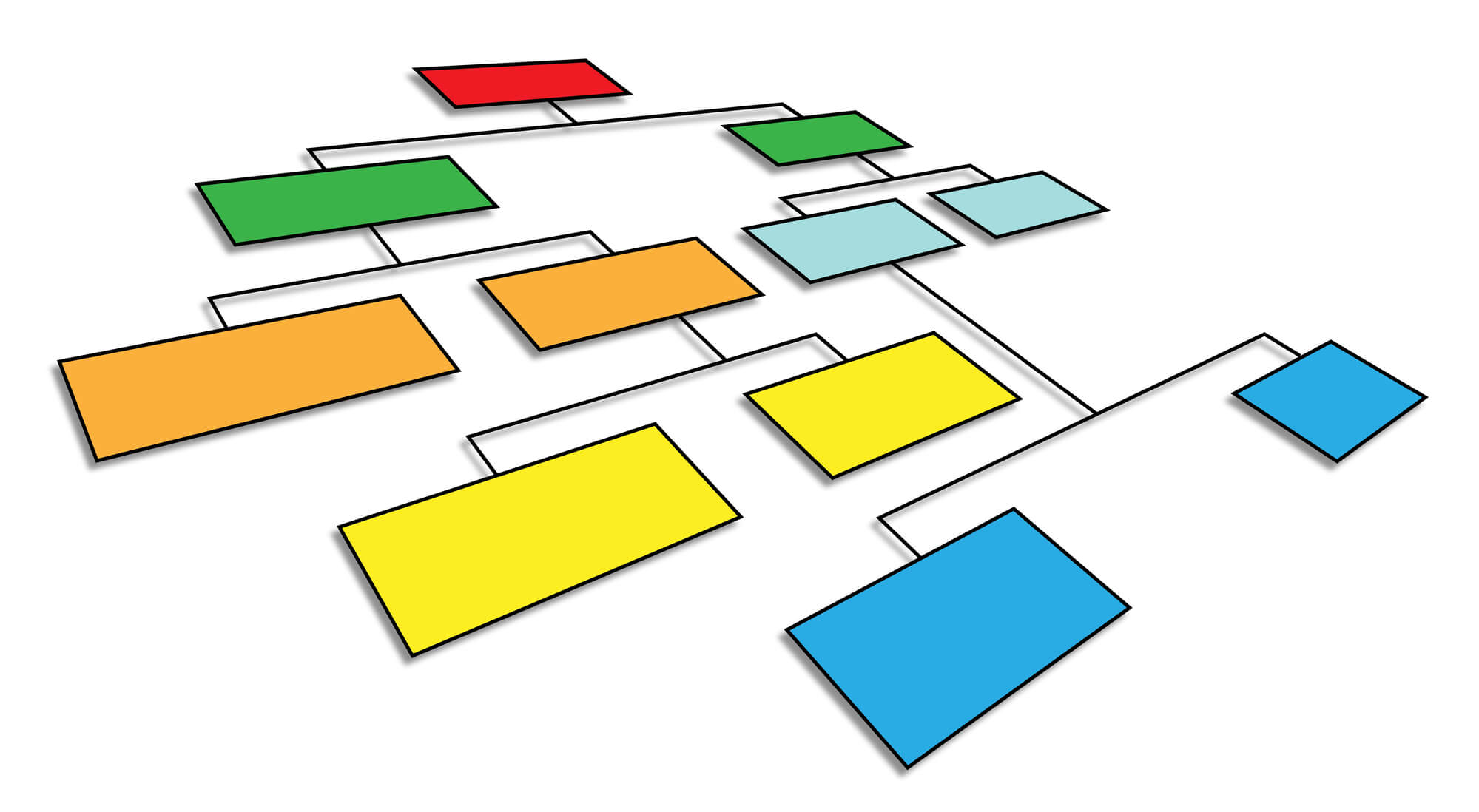
A functional organizational chart is a diagram of every position in your company, job titles, a summary of duties, and a reporting structure. It’s essentially a flowchart made up of boxes and arrows. Each box contains a position name and description, while the arrows show who reports to whom.
Some charts are arranged vertically, with the CEO at the top. Other businesses find it easier to arrange horizontally depending on the reporting structure. Either way, a functional organizational structure groups employees by their roles within a designated department, such as marketing, finance, or operations.
A functional organizational chart can help new employees and veterans alike. Often, even employees who have been with the company for years won’t know their coworkers’ job titles or duties. An organizational chart helps everyone learn who to contact with questions or new ideas, making collaboration more manageable.
While this structure works well for a variety of businesses, it’s best suited for multi-departmental operations and companies with enough employees for reporting to get hairy. It’s beneficial for small businesses that have begun to scale, as it clarifies the reporting process and takes pressure off a business owner trying to delegate more responsibility to team leads.
Before committing to any one organizational structure, it helps to understand what you’re signing up for. There are a few reasons this one tends to work better than a flat organizational chart, matrix organization structure, cross-functional organizational chart, or other divisional structure:
A functional top-down organizational chart does come with a few trade-offs that are worth considering:
To create a functional organizational chart for your business, first list all your company’s employees, along with the job titles and duties that correspond with each. Include each person’s contact information, such as company email addresses and phone numbers, and group the boxes by department.
Here’s a tip that I learned the hard way and has become a strongly suggested “best practice” for my coaching clients: It’s essential to create two versions of your chart: one depicting your company structure as it is now, and another for a future year with only duties and job titles instead of names. A future-oriented perspective is important for planning how to manage growth. This should project your staffing needs as your business grows.
Once you have your list of employees and job titles, write a brief summary of each person’s core responsibilities. This doesn’t need to be a complete job description—two or three sentences should be enough to give context. The goal is for anyone glancing at the functional organizational chart to immediately understand what each role contributes to the business.
Next, arrange them in hierarchical order. Draw clear reporting lines between positions: who manages whom, and who each person should go to with questions, project updates, or other issues. In a functional organizational structure, employees typically report to their department head, who in turn reports to an executive or the business owner.
Then use flowchart-making software to turn your list into a graphic. This can help newer employees navigate the organization and put names to faces at a glance.
Before finalizing your functional organizational chart, review it with your department heads or team leads. They’ll often catch inaccuracies you’ve missed, such as an incorrect reporting line, a missing role, or a title that no longer reflects what someone actually does. Getting their input also makes it easier to roll the chart out to the wider team.
A functional organizational chart is only useful if people know it exists and can access it easily. Share it during onboarding, include it in your employee handbook, and post it somewhere your team can reference it, whether on a shared drive or in a project management tool.
Plan to revisit and update the chart whenever roles change, new hires join, growth explodes, or the company restructures. Treat it like a living document, not a one-time project.
You don’t need graphic design experience to build a professional organizational chart. Plenty of digital tools make it easy, even for beginners. Here are just a few.
Whichever tool you choose, keep your functional organizational chart in a format that’s easy to update. Org charts that live in a folder and never get revised quickly become inaccurate, and an inaccurate chart is almost as bad as none at all.
Creating an organizational chart for a small business is a great way to visualize your staffing needs and get serious about planning for the future. When you are ready to work on your organization’s goals, schedule a complimentary video coaching session with me, and let’s get the ball rolling. For more leadership tips, click here to sign up for my email newsletter
Coach Dave
Most business owners I meet want to build a better company. Better service. Better quality.…
Most people assume business owners lose sleep because they have too many problems. After more…
If you are wondering how to get out of a franchise that is consuming your…
If you’re dealing with stalled growth despite knowing your market well, it’s worth asking whether…
You don’t have to watch reality TV to know that family businesses can be both…
Very few business owners, executives, and hiring managers believe their introverted staff can excel in…