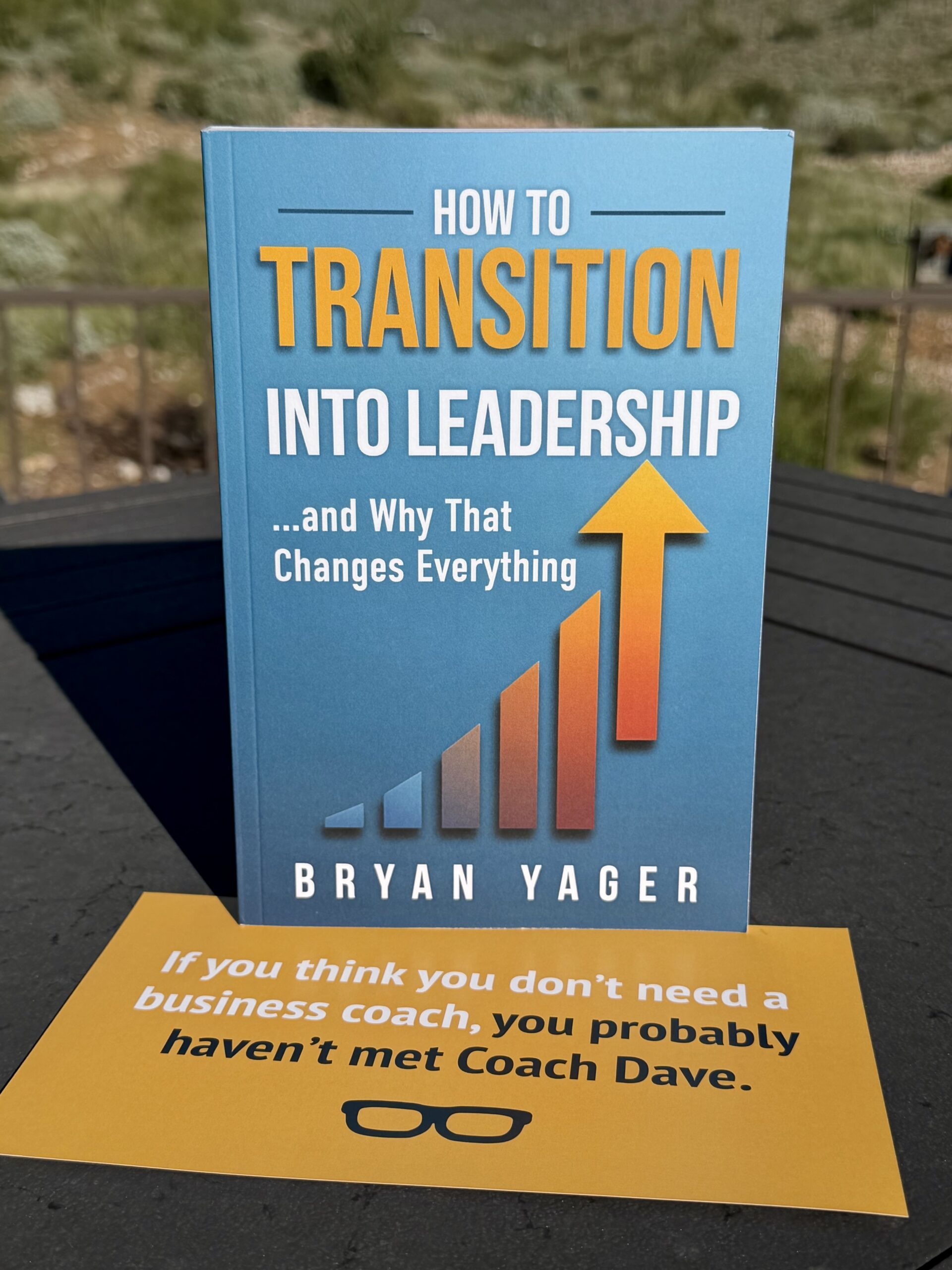
Yager is an accomplished coach, author, speaker, and consultant with over four decades of leadership experience. He has learned firsthand that leadership is not merely a promotion: it’s a total transformation.
When growth stalls in a business, it’s often not from a lack of talent, capital, or opportunity. Almost every time, the culprit is a leadership trap, and the fix is a new leadership mindset. Yager’s main idea is that an owner’s inability to shift from expert to leader can keep an organization stuck in a rut until a major change occurs.
Early on in a business, having the owner handle approvals can help things move quickly. Tasks get done, decisions get made, and problems get solved without touching too many desks. As the company expands, however, the same process soon becomes a bottleneck.
Yager describes a commonly expressed truth: owners say they want their business to grow, but they unconsciously protect their own importance, which then hinders that growth. Being needed for daily operations might make leaders feel valuable, but staying stuck in this mode is a leadership trap that limits your company more than market challenges ever could.
If you ask to be copied on everything, find yourself frequently correcting your team’s output, or check your email constantly even on vacation to see what needs to be approved, these are all signs you’re a micromanager. You can immediately reduce workflow delays by trusting your department heads to manage and sign off on their own departments’ work.
The good news is that your employees will step up if you give them the option. Then you can stop wondering why your team keeps avoiding ownership and instead embrace a culture of radical responsibility.
To shift into a leadership mindset, you need to change how you measure success. Stop thinking in terms of your personal wins and start focusing on what your team can accomplish together.
It’s tempting to cling to your strengths. Many high performers derive a sense of identity from their achievements, and it’s difficult to start thinking in terms of “we” instead of “me.” The true mark of a leader is the ability to put your strengths to work for the good of the many rather than working purely for your own personal productivity.
Heroes are exhausting people to work for. They tend to swoop in and save the day, but in doing so, they never empower anyone to save themselves. Architects, on the other hand, design organizations that function and thrive without their constant intervention. This, in turn, empowers employees to become more capable.
Yager’s lesson here is to build a team of leaders rather than a team of followers. The trick is learning how to delegate the right way. Many entrepreneurs struggle to relinquish control, but doing so is the only way to give your people a chance to step fully into their role.
A servant leadership approach can help you here. You are serving your team by letting them grow and take on more responsibility. Servant leadership has a snowball effect on your organization’s culture. When all employees are looking to help each other learn, everyone wins.
Leaders might look like winners while putting out fires, but the real mark of leadership is enacting systems that prevent those fires from starting in the first place. Avoiding the leadership trap of heroics is mostly a systems problem.
Your systems should reduce the business’s reliance on the owner so operations never depend on just one person. Staying stuck in daily execution leads to burnout and stifles growth.
Perhaps the most valuable lesson in Yager’s book is that you can’t develop others until you develop yourself. Discipline, accountability, and communication should be the foundation of your leadership strategy. Recognizing bad leadership habits to unlearn and working on yourself might be uncomfortable, but it’s where the leadership mindset becomes reality.
Michael Gerber’s philosophy in The E-Myth, like Yager’s, revolves around the dichotomy between skilled technicians and entrepreneurs. Leaders who are stuck in the execution phase become bottlenecks in their own process, while those who can adopt the right new leader mindset move on to developing people and building systems that work.
Gino Wickman is all in on the idea of creating systems that limit the business’s dependence on its owner. While Yager mainly focuses on the leadership mindset shift required to effectively transform as an entrepreneur, Wickman, in his book Traction, provides concrete steps for building the method that will help you lead.
Multipliers by Liz Wiseman addresses at length the idea that leaders should focus on developing their team’s capabilities. A multiplier builds a room full of smart, capable people, while a diminisher drains it. The goal is not to excel in your own right or to be the smartest person in the room, but to fill the room with smart, capable people.
Like Yager, Wiseman agrees that a leader preoccupied with his own skill can inhibit the company’s growth. This often shows up as micromanagement, where the team’s growth is stifled because they never get the chance to step up.
Yager’s How to Transition Into Leadership is a great read for anyone looking to grow their business beyond their own capacity. True leaders don’t focus on their own output—they develop their team, encourage problem-solving, communicate clearly, and build systems that work without them.
Are you ready to take your leadership mindset to the next level? Small business coaching can help. Click here to schedule a free video meeting, and let’s talk about going from doer to leader. For more tips on business, leadership, and more, sign up for my email newsletter to get weekly articles delivered right to your inbox.
Coach Dave
In business, we spend plenty of time preparing presentations, budgets, and strategic plans, yet we…
Most business owners I meet want to build a better company. Better service. Better quality.…
Most people assume business owners lose sleep because they have too many problems. After more…
If you are wondering how to get out of a franchise that is consuming your…
If you’re dealing with stalled growth despite knowing your market well, it’s worth asking whether…
You don’t have to watch reality TV to know that family businesses can be both…